


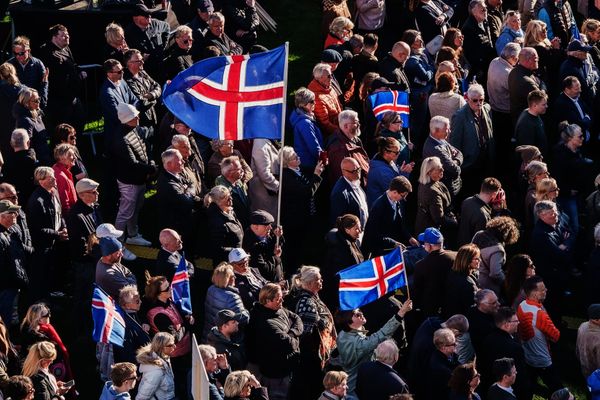
Throughout the 1990s and the first decade of the new century, Iceland chose to stay out of the European Union, becoming instead a founder member of the European Economic Area (EEA), a much looser arrangement that grants access to the single market without membership of the Union. And on August 29, Icelanders voted to keep things that way, rejecting their government’s proposal to reopen accession negotiations with the EU: 52.8 percent against, 47.2 percent in favor, on a turnout of 82.5 percent. More than four in five Icelanders came out to answer a question that most European electorates have never been permitted to answer at all, and the government, to its credit, has said it will abide by the result. This is good news for Iceland.
The island nation already made the argument against EU membership better than any article could. When the financial crisis struck in 2008, Iceland was hit harder than almost any country in Europe. Ninety percent of its banking system collapsed. Yet it recovered faster and better than virtually all of them. Why? Because it had something eurozone countries had surrendered: sovereignty. Iceland could let its currency adjust; it could let its banks fail rather than being forced by the European Central Bank to bail them out at the expense of its citizens; it could impose capital controls on its own authority and lift them on its own timetable—which it did, fully, only in 2017. It could also ask its own people what they wanted: In the Icesave referendums of 2010 and 2011, Icelanders refused to shoulder the private debts of failed bankers.
Compare that with the fates of Greece, Ireland, Portugal, and my own country, Italy: countries that, trapped in the eurozone, were subjected to years of punishing austerity, mass unemployment, and social devastation, administered by unelected technocrats in Brussels and Frankfurt. Iceland weathered the storm because it was a much freer country. That was the lesson of 2008, and it remains truer than ever today.